
Choosing the right material is one of the most important decisions when sourcing car mats.
For automotive accessory importers, distributors, and private-label brands, material selection affects much more than appearance. It can influence durability, water resistance, cleaning, vehicle fitment, product positioning, and sourcing cost.
From TPE and rubber to carpet, PVC and multi-material constructions, each material serves a different market need.
This guide compares six common car mat materials to help B2B buyers choose the right option for their product lines and target markets.
Why Car Mat Material Matters
Different markets require different types of car floor protection.
Buyers sourcing products for snowy or rainy regions may prioritize waterproof construction and raised edges, while premium car mat lines may place more emphasis on appearance, texture, and comfort.
Material selection can affect:
- Water resistance
- Wear resistance
- Temperature performance
- Cleaning and maintenance
- Product weight
- Surface texture
- Vehicle fitment
- Customization options
- Target price range
Understanding these differences makes it easier to select the right product before requesting samples or quotations.
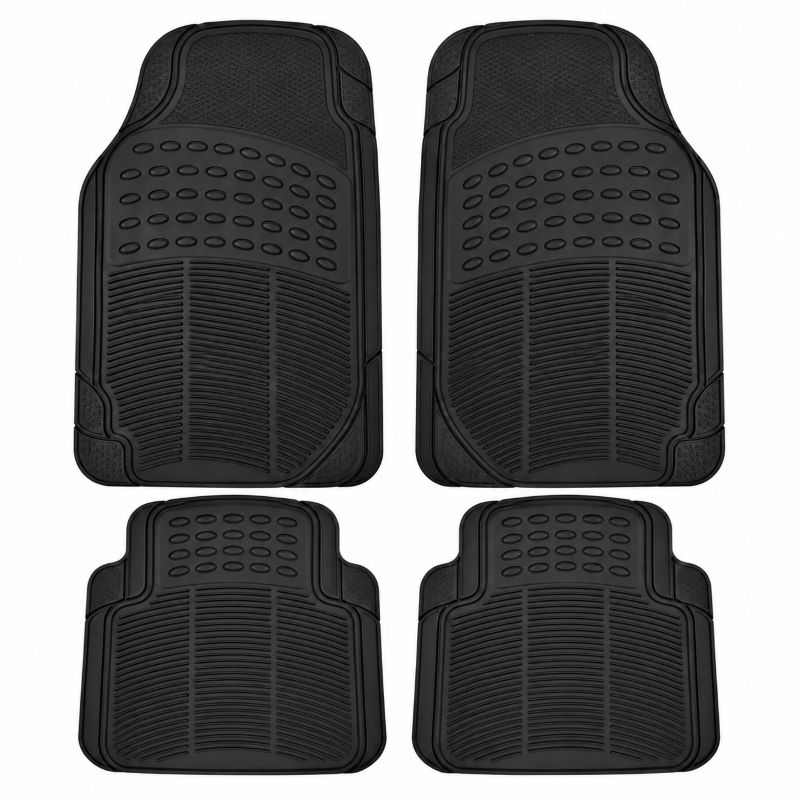
1. Rubber Car Mats
Rubber is one of the most established materials for all-weather car mats.
Depending on the formulation, car mat manufacturers may use natural rubber or synthetic rubber such as SBR (styrene-butadiene rubber) and nitrile rubber.
Rubber is commonly selected for products that require durability, water resistance, and easy cleaning.
Advantages
- Good water resistance
- Durable under frequent use
- Easy to wash
- Good grip when properly textured
- Suitable for heavy-duty applications
Considerations for B2B Buyers
Rubber quality can vary significantly depending on the formulation.
When comparing suppliers, buyers should consider factors such as odor, flexibility, product weight, surface texture, temperature performance, and anti-slip backing.
Suitable for: All-weather product lines, commercial vehicles, pickup trucks, SUVs, and heavy-duty applications.
2. Carpet Car Mats
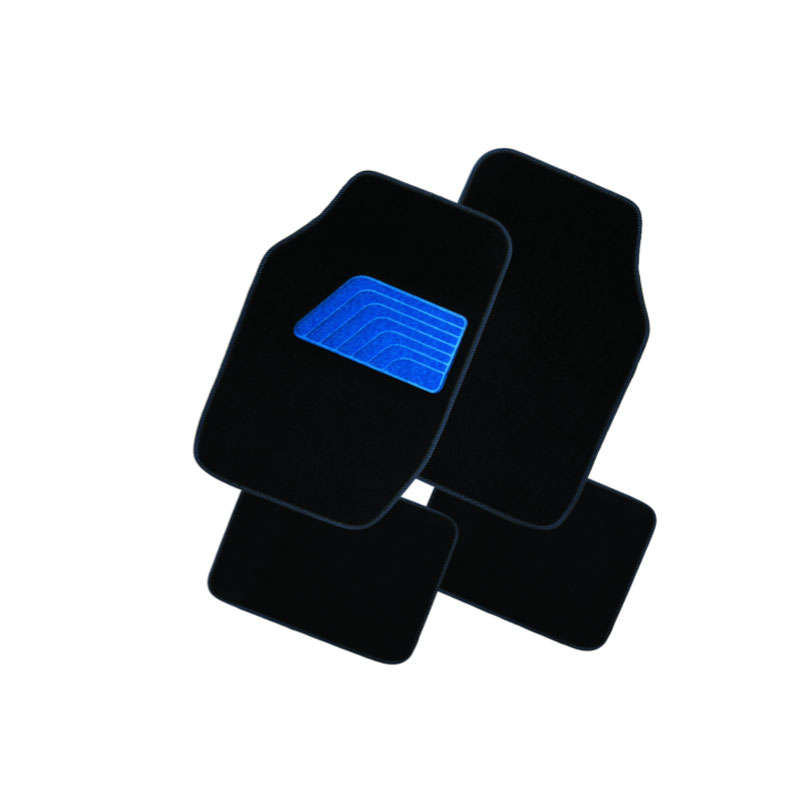
Carpet car floor mats are widely used in passenger vehicles and OEM car interior applications.
Common surface materials include nylon and olefin fibers, usually combined with rubber, PVC, or thermoplastic backing.
Compared with all-weather car mats, carpet car mats focus more on interior appearance, comfort, and design flexibility.
a. Advantages
- Premium interior appearance
- Comfortable surface
- Wide range of colors and textures
- Good dust and fine-debris trapping
- Suitable for customized branding
b. Considerations for B2B Buyers
The backing is just as important as the visible carpet surface.
Buyers should evaluate fiber density, pile height, backing material, edge finishing, water resistance, and cleaning requirements.
Suitable for: Passenger vehicles, OEM replacement products and private-label collections.
3. PVC Car Mats
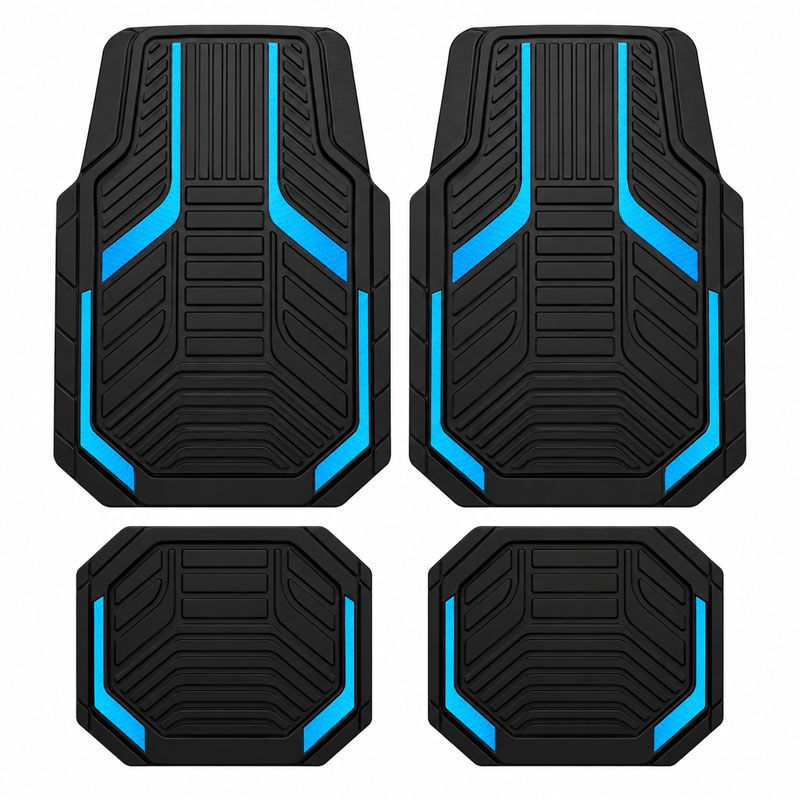
PVC provides an economical option for many automotive floor mat applications.
These materials can be molded into different shapes and surface patterns, allowing car mat manufacturers to create textured finishes and decorative designs.
a. Advantages
- Competitive cost
- Easy to clean
- Lightweight
- Flexible design options
- Available in different colors and surface finishes
b. Considerations for B2B Buyers
Performance can vary depending on the PVC formulation and product structure.
For markets with significant temperature variation, buyers should pay attention to flexibility, heat performance, surface grip, and relevant material compliance requirements.
Suitable for: Value-oriented product ranges, universal mats, mild-climate markets, and price-sensitive distribution channels.
4. TPE Car Mats
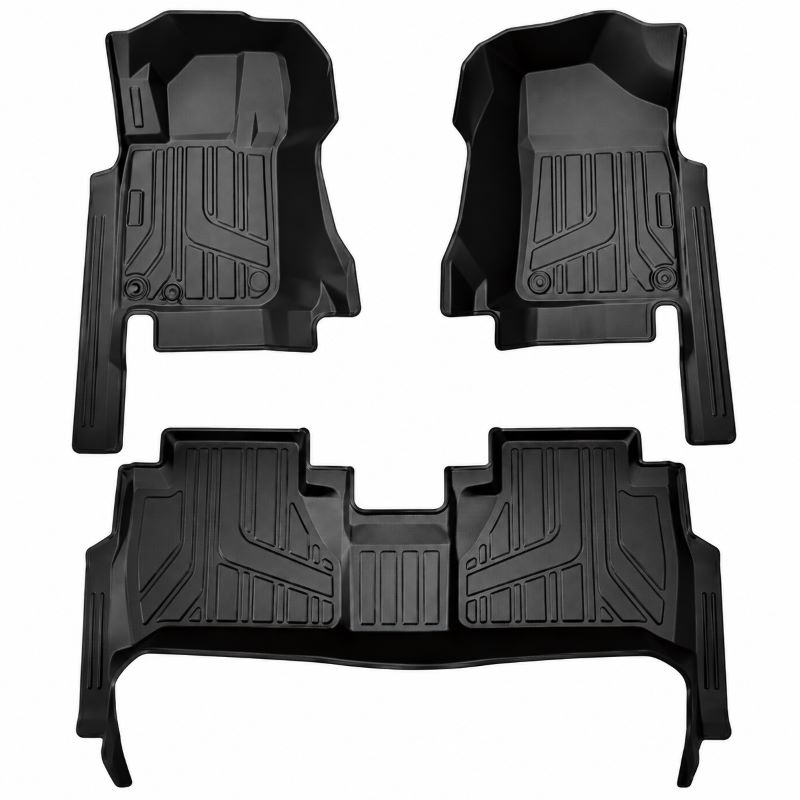
TPE (Thermoplastic Elastomer) has become increasingly popular for molded, vehicle-specific floor mats.
It combines elastic properties with thermoplastic processing characteristics, making it suitable for complex shapes and precision molding.
TPE mats can be developed using vehicle data and 3D scanning to create contours that closely follow the vehicle floor.
a. Advantages
- Excellent water resistance
- Good flexibility
- Easy to clean
- Suitable for precision molding
- Supports raised edges and drainage channels
- Suitable for vehicle-specific designs
- Can support OEM/ODM development
b. Considerations for B2B Buyers
Not all TPE formulations perform the same.
Buyers should confirm material specifications, odor requirements, temperature performance, product thickness, weight, fitment accuracy, and relevant test documentation where required.
For custom-fit TPE car mat, the supplier’s 3D scanning, mold development, and production capabilities are also important.
Suitable for: Vehicle-specific car floor mats, all-weather ranges, private-label programs, and OEM/ODM projects.
Car Mat Material Comparison
Material | Water Resistance | Durability | Cleaning | Product Positioning | Typical Applications |
Rubber | Excellent | Excellent | Very Easy | Value–Mid | All-weather, heavy-duty |
Carpet | Low–Moderate | Good | Moderate | Mid–Premium | Interior, OEM-style |
PVC/Vinyl | Good | Moderate | Easy | Value | Universal, economical |
TPE | Excellent | Excellent | Very Easy | Mid–Premium | Custom-fit, all-weather |
Natural Fiber | Low | Moderate | Difficult | Niche | Decorative, dry climate |
Hybrid | Very Good | Good–Excellent | Moderate | Premium | Multi-function, private label |
How to Choose the Right Car Mat Material for Your Market
There is no single material that is right for every buyer.
When selecting car mats for wholesale, buyers need to consider four main factors:
1. Climate
For rainy, snowy, or muddy markets, water-resistant materials such as TPE and rubber are generally more suitable.
2.Product Positioning
PVC and some rubber car mats can support premium interior product lines, while carpet car mat is better suited to value-oriented ranges.
3.Vehicle Application
Vehicle-specific car mats require accurate fitment and may benefit from precision-molded TPE construction. Universal products may offer more flexibility for broader vehicle coverage.
4.Customization Requirements
If your project requires custom colors, logos, packaging, textures, or vehicle-specific development, confirm the supplier’s OEM/ODM capabilities before selecting the material.
What Should B2B Buyers Check Before Ordering?
Before placing a bulk car mat order, confirm:
- Material specification
- Product thickness and weight
- Temperature requirements
- Odor requirements
- Surface and anti-slip design
- Vehicle fitment
- Color and texture
- Logo customization
- Packaging options
- Relevant test or compliance documentation
- MOQ and production lead time
For customized car mats, requesting samples before mass production can help verify both material quality and finished-product specifications.
FAQ
1.What is the most common material for all-weather car mats?
PVC and TPE are commonly used for all-weather car mats because they offer good water resistance and are relatively easy to clean. The appropriate choice depends on the product design, target market, price positioning, and required fitment.
2.What is the difference between TPE and rubber car mats?
TPE is a thermoplastic elastomer that is particularly suitable for precision molding and vehicle-specific designs. Rubber is widely used for durable and heavy-duty car floor protection. Their actual performance depends on the material formulation and manufacturing process.
3.Which car mat material is best for custom-fit products?
TPE is widely used for custom car mats because it can be precision molded using vehicle data and 3D scanning. For B2B projects, mold accuracy and vehicle fitment verification are just as important as the material itself.
4.Can car mat materials be customized for private-label products?
Yes. Depending on the material and manufacturing process, customization may include colors, textures, logos, labels, packaging, and vehicle-specific designs.
Looking for Custom Car Mats for Wholesale or OEM Projects?
AUDLY provides car mat solutions for wholesalers, distributors, importers, and private-label automotive accessory brands.
Available options can include:
- TPE car mats
- Rubber car mats
- Carpet car mats
- Vehicle-specific designs
- Custom colors and textures
- Logo customization
- OEM/ODM development
- Private-label packaging
- Bulk order support
Send us your target market, vehicle models, preferred material, estimated quantity, and customization requirements to discuss your car mat project.