
Choosing the right material for automotive floor mats is more than a product specification decision. For wholesalers and distributors, material selection can influence product positioning, manufacturing requirements, shipping costs, customization options, and long-term customer satisfaction.
Two of the most common material categories are TPE (Thermoplastic Elastomer) and rubber.
Both can provide reliable car floor protection, but they differ in material characteristics, manufacturing processes, design flexibility, weight, environmental considerations, and suitable applications.
So, what is the difference between TPE and rubber car mats, and which material better fits your product line?
This guide compares the two car mats from a practical B2B sourcing perspective.
What Is TPE?
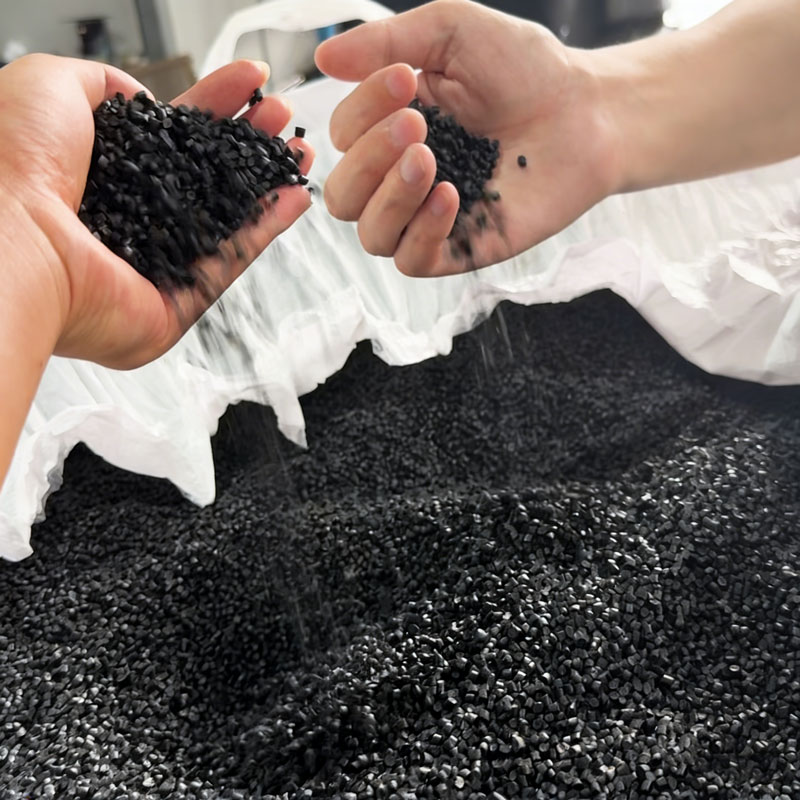
TPE (Thermoplastic Elastomer) refers to a family of materials that combine rubber-like flexibility with the processing characteristics of thermoplastics.
Unlike conventional vulcanized rubber, many TPE materials can be softened by heat and processed using thermoplastic manufacturing methods such as injection molding.
Depending on the formulation, TPE materials used in automotive applications may offer:
- Good flexibility
- Precise moldability
- Low-temperature performance
- Water and chemical resistance
- Low-odor formulations
- Recyclability during certain manufacturing processes
- Good design flexibility
Common TPE families used in automotive applications include SEBS-based compounds, TPV, and TPO-based materials.
The performance of a TPE car mat depends on its formulation, material quality, product design, and manufacturing process.
What Are Rubber Car Mats?
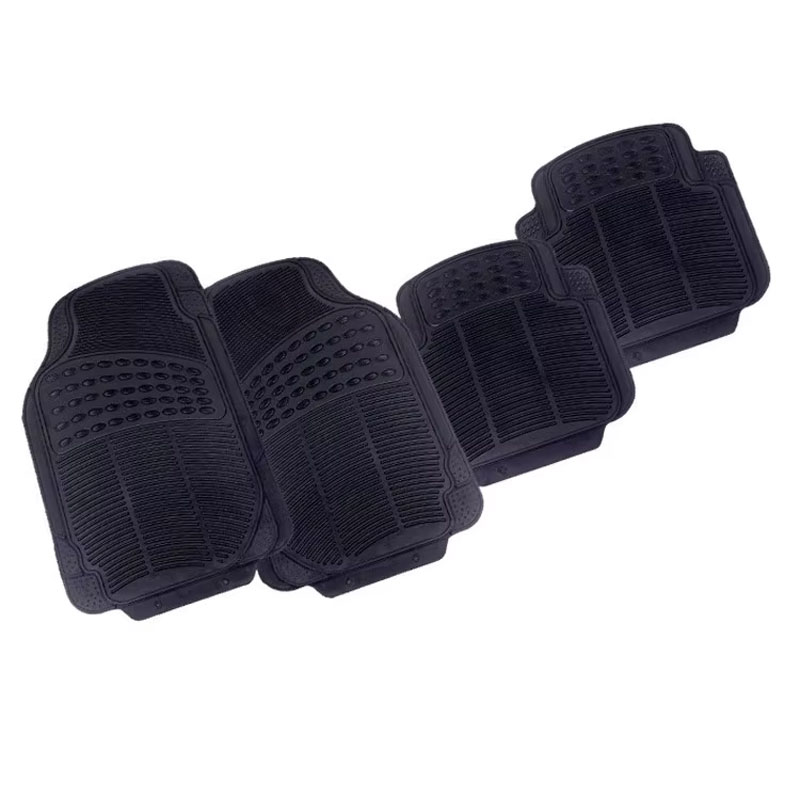
Rubber car mats are typically manufactured from natural or synthetic rubber compounds.
Common materials may include:
- Natural rubber
- SBR (Styrene-Butadiene Rubber)
- Other synthetic rubber compounds
- Blended rubber formulations
Rubber is widely used for automotive floor protection because of its flexibility, grip, abrasion resistance, and proven performance in demanding environments.
Depending on the formulation, rubber car mats can be produced through compression molding, injection molding, or other rubber-processing methods.
Like TPE, not all rubber products perform the same. Material formulation, filler content, manufacturing quality, thickness, and product design all influence the finished mat’s performance.
TPE vs.Rubber Car Mats: Key Differences
Rather than asking which material is universally “better,” B2B buyers should evaluate which material better matches their target market and product requirements.
1. Durability and Wear Resistance
Both TPE and rubber can provide good durability when produced with appropriate formulations.
Rubber is well known for abrasion resistance. It performs well in heavy-duty uses with frequent foot traffic. It holds up against work boots, dirt, gravel, and other abrasive materials.
TPE can also provide good long-term durability while maintaining flexibility under changing environmental conditions.
However, actual service life depends on several factors, including:
Material formulation
- Thickness
- UV exposure
- Temperature cycles
- Cleaning chemicals
- Driving environment
- Frequency of use
For B2B buyers, comparing physical samples and relevant test data is generally more useful than making purchasing decisions based solely on material names.
2. Temperature and Weather Resistance
Car floor mats may be exposed to significant temperature changes, particularly in vehicles parked outdoors.
Both TPE and rubber car mats can be formulated for different temperature ranges.
High-quality TPE can maintain flexibility across a wide range of operating conditions, making it suitable for all-weather floor mat applications.
Rubber also performs well in various climates, but its long-term performance depends on the rubber formulation, curing process, additives, and environmental conditions.
For markets with very hot summers or extremely cold winters, buyers should ask suppliers for relevant temperature-resistance specifications or test reports rather than assuming performance based only on material category.
3. Odor and VOC Considerations
Odor is an important consideration for automotive interior products.
Some rubber compounds, particularly formulations containing certain curing agents, fillers, or recycled materials, may have a noticeable odor when first unpacked.
TPE can be formulated for relatively low odor and low VOC emissions, which can make it attractive for automotive interior applications.
However, it is important to avoid assuming that all TPE products are automatically odor-free or that all rubber products have strong odors.
Performance depends on the formulation and manufacturing quality.
For markets with strict car interior requirements, buyers can request:
- VOC test reports
- Odor test results
- Material compliance documentation
- Third-party laboratory reports where applicable
4. Weight and Transportation
TPE car mats can often be designed with a relatively lightweight structure while maintaining the required shape and coverage.
Traditional thick rubber car mats may be heavier depending on material density, thickness, and design.
For international wholesalers and importers, product weight can affect:
- Carton weight
- Container loading
- Freight costs
- Warehouse handling
- Last-mile delivery costs
However, weight should be evaluated based on the actual product specification rather than material category alone.
A thick TPE car mat may weigh more than a thin rubber car mat, so buyers should compare finished-product weight when evaluating quotations.
5. Water, Mud, and Chemical Resistance
Both TPE and rubber are commonly used for all-weather floor protection because they can resist water, mud, road debris, and many common automotive contaminants.
Chemical resistance varies significantly by formulation.
For example, prolonged exposure to oils, fuels, strong cleaning agents, or other chemicals may affect different TPE and rubber compounds differently.
For commercial fleets or markets where chemical exposure is an important concern, buyers should confirm the resistance requirements with the car mat manufacturer and request appropriate material testing where necessary.
Design and Customization
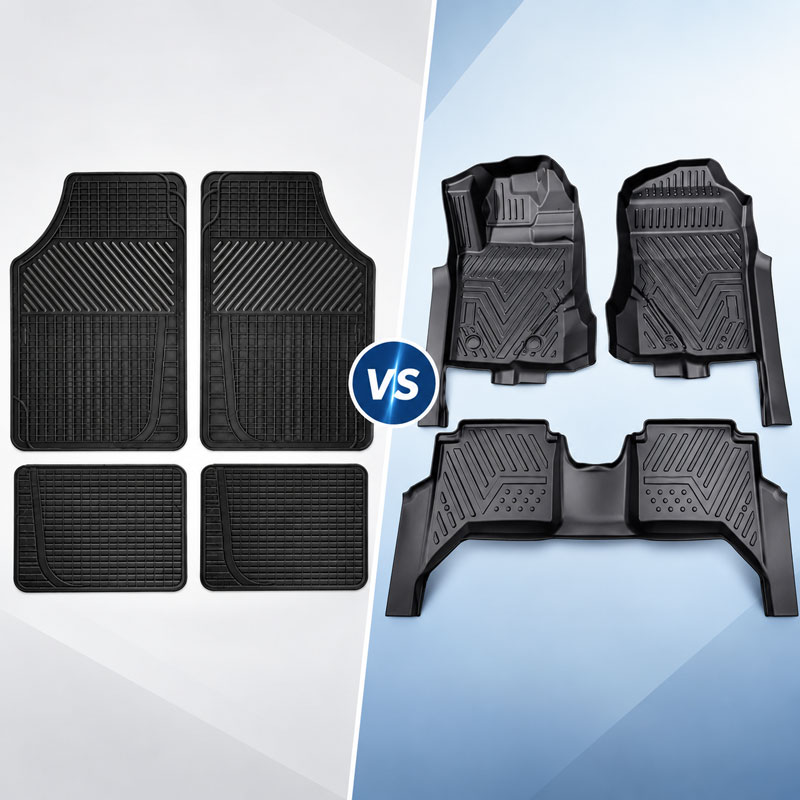
One of the major advantages of custom TPE car mats is its compatibility with precision molding.
Combined with 3D vehicle scanning and mold development, TPE can be used to manufacture complex shapes that closely follow the contours of a vehicle’s footwell.
Typical design features may include:
- Vehicle-specific contours
- Raised edges
- Water-containment channels
- Anti-slip textures
- Factory fixing positions
- Reinforced heel areas
- Custom surface patterns
- Embossed logos
This makes TPE particularly suitable for custom-fit and OEM/ODM car mat programs.
Rubber mats can also be molded, textured, embossed, and customized. They remain widely used for universal mats, semi-custom products, heavy-duty applications, and vehicle-specific designs.
The right manufacturing method depends on the product concept, required fitment, order volume, mold investment, and target price.
Manufacturing Differences
TPE Car Mat Manufacturing
TPE automotive floor mats are commonly manufactured using injection molding or related thermoplastic processing methods.
A vehicle-specific TPE mat production process may involve:
3D Scanning → Product Design → Mold Development → Material Preparation → Injection Molding → Trimming → Quality Inspection → Packaging
Injection molding allows detailed product features to be formed directly into the mat, but it also requires accurate molds and controlled processing parameters.
For custom vehicle-specific programs, mold development is therefore an important part of the initial investment.
Rubber Car Mat Manufacturing
Rubber floor mats may be manufactured using compression molding, injection molding, or other rubber-processing technologies depending on the formulation and product design.
Rubber manufacturing has a mature global supply chain and can support a wide range of products, from economical universal mats to heavy-duty automotive applications.
Production cost and MOQ vary considerably depending on:
- Material formulation
- Product size
- Mold requirements
- Thickness
- Customization
- Packaging
- Order volume
For this reason, buyers should compare actual quotations and specifications instead of assuming that one material will always have a lower unit cost.
Sustainability and Recyclability
Sustainability is becoming an increasingly important consideration in automotive supply chains.
Many TPE materials have an advantage during manufacturing because thermoplastic scrap may be reprocessed under appropriate conditions.
This can help car mat manufacturers reduce certain types of production waste.
However, whether a finished TPE car mat is recyclable in practice depends on factors such as:
- Material formulation
- Additional components
- Local recycling infrastructure
- Product collection systems
- Contamination after use
Vulcanized rubber cannot simply be melted and remolded in the same way as a thermoplastic material.
However, used rubber can still be recovered through methods such as grinding, devulcanization, or use in secondary applications.
Therefore, sustainability claims should be based on the specific material, manufacturing process, and available recycling system, rather than simply labeling one material “eco-friendly” and the other “non-recyclable.”
TPE vs. Rubber Car Mats: Quick Comparison
Factor | TPE Car Mats | Rubber Car Mats |
Flexibility | Good | Good to Excellent |
Abrasion Resistance | Good, formulation-dependent | Often strong in heavy-duty applications |
Weight | Can be relatively lightweight | Often heavier in thick designs |
Odor | Low-odor formulations available | Depends strongly on compound |
Complex 3D Design | Highly suitable | Possible, process-dependent |
Vehicle-Specific Fit | Excellent with precision molding | Available depending on design/process |
Water Resistance | Excellent | Excellent |
Chemical Resistance | Formulation-dependent | Formulation-dependent |
Reprocessing During Manufacturing | Possible for many TPE formulations | More limited after vulcanization |
Heavy-Duty Applications | Suitable | Particularly well established |
OEM/ODM Customization | Highly suitable | Also available |
The table should be used as a general sourcing reference rather than an absolute performance ranking. Specific formulations and product designs can produce different results.
When Should You Choose TPE Car Mats?
TPE may be a strong option when your product strategy focuses on: Vehicle-Specific Fitment
TPE works well with 3D scanning and precision molding, making it suitable for custom-fit car floor mat programs.
A. Premium Automotive Accessories
Clean surface designs, complex contours, low-odor formulations, and customized textures can support higher-end product positioning.
B. Private-Label Programs
TPE mats can support customization such as:
- Custom logos
- Surface textures
- Colors
- Vehicle applications
- Packaging
- Labels
All-Weather Product Lines
Raised edges, channels, and molded structures can help contain water, mud, sand, and other debris.
Lightweight Product Development
For importers concerned about finished-product weight and logistics efficiency, optimized TPE designs may provide opportunities to reduce weight.
When Should You Consider Rubber Car Mats?
Rubber may be suitable when the product line prioritizes:
A. Heavy-Duty Use
Rubber has a long history in demanding environments where abrasion resistance and rugged performance are important.
B. Universal or Semi-Custom Applications
Rubber is widely available across different universal and semi-custom car mat formats.
C. Price-Sensitive Product Segments
Depending on the formulation, design, and sourcing conditions, rubber can provide competitive options for entry-level or value-focused product lines.
D. Established Product Categories
For distributors already selling conventional rubber car mats successfully, there may be little reason to replace the entire product line.
Instead, adding TPE car mats can create an additional product category for customers seeking vehicle-specific or premium alternatives.
What Should B2B Buyers Compare Before Ordering?
When comparing TPE and rubber car mat suppliers, material should be only one part of the sourcing decision.
Consider evaluating:
- Material Specification
What exact TPE or rubber formulation is being used?
- Vehicle Fitment
Is the product universal, semi-custom, or developed from vehicle-specific data?
- Mold Development
Who develops and owns the mold, and what happens if modifications are required?
- Testing and Compliance
Can the supplier provide relevant material or product test reports?
- Sample Approval
Can you inspect and test a sample before mass production?
- Batch Consistency
How does the car mat manufacturer control dimensions, color, texture, hardness, and odor between production runs?
- OEM/ODM Capability
Can the supplier customize logos, patterns, packaging, labels, and vehicle applications?
- Total Sourcing Cost
Compare not only unit price but also mold costs, packaging, freight, MOQ, lead time, quality risks, and after-sales costs.
Which Is Better: TPE or Rubber Car Mats?
There is no single material that is best for every automotive floor mat application.
TPE is particularly well suited to vehicle-specific, precision-molded, lightweight, and customized automotive floor mat programs.
Rubber remains a practical option for heavy-duty, traditional, universal, and price-sensitive product categories.
For many automotive accessory businesses, the most effective approach is not necessarily replacing one material with the other.
Instead, both materials can serve different positions within the same product portfolio.
For example:
Rubber mats: universal, heavy-duty, and value-oriented ranges
TPE mats: vehicle-specific, custom-fit, private-label, and premium ranges
The final decision should be based on your target market, product positioning, required specifications, order volume, and sourcing strategy.
Looking for Custom TPE Car Mats for Your Market?
If you are an automotive accessory importer, wholesaler, distributor, or private-label brand developing a TPE floor mat product line, supplier capability matters as much as material selection.
AUDLY supports B2B buyers with customized car floor mat solutions for different vehicle models and market requirements.
Available customization options can include:
- Vehicle-specific fitment
- OEM/ODM development
- Custom logos
- Colors and textures
- Surface pattern customization
- Private-label packaging
- Wholesale and bulk-order solutions
Send us your target market, vehicle models, estimated order quantity, and customization requirements to discuss your TPE car mat project.