
TPE car mats are widely used in the automotive aftermarket because of their durability, precise fit, easy cleaning, and all-weather performance. But for importers, wholesalers, distributors, and automotive accessory brands, product quality depends on much more than the material itself.
From 3D vehicle scanning and mold development to injection molding, trimming, quality inspection, and packaging, every stage of the TPE car mat manufacturing process affects fitment, surface quality, durability, and consistency.
Understanding how TPE car mats are made can also help B2B buyers evaluate suppliers more effectively and develop better OEM and custom TPE car mat programs.
In this guide, we take a closer look at the complete manufacturing process behind TPE automotive floor mats.
What Is TPE and Why Is It Used for Car Mats?
TPE (Thermoplastic Elastomer) is a material that combines many of the flexible characteristics of rubber with the processing advantages of thermoplastics.
For car floor mats, TPE offers several practical benefits:
- Flexible and resilient structure
- Good resistance to water, dirt, and common automotive contaminants
- Suitable for precision molding
- Good low-temperature flexibility
- Easy-to-clean surface
- Recyclable material options
- Suitable for complex automotive interior designs
Unlike traditional flat or universal mats, molded TPE floor mats can be manufactured according to the specific contours of a vehicle’s footwell.
This makes TPE particularly suitable for custom-fit and vehicle-specific car mat applications.
Step 1: 3D Vehicle Scanning and Digital Design
The manufacturing process starts before any TPE material enters the production line.
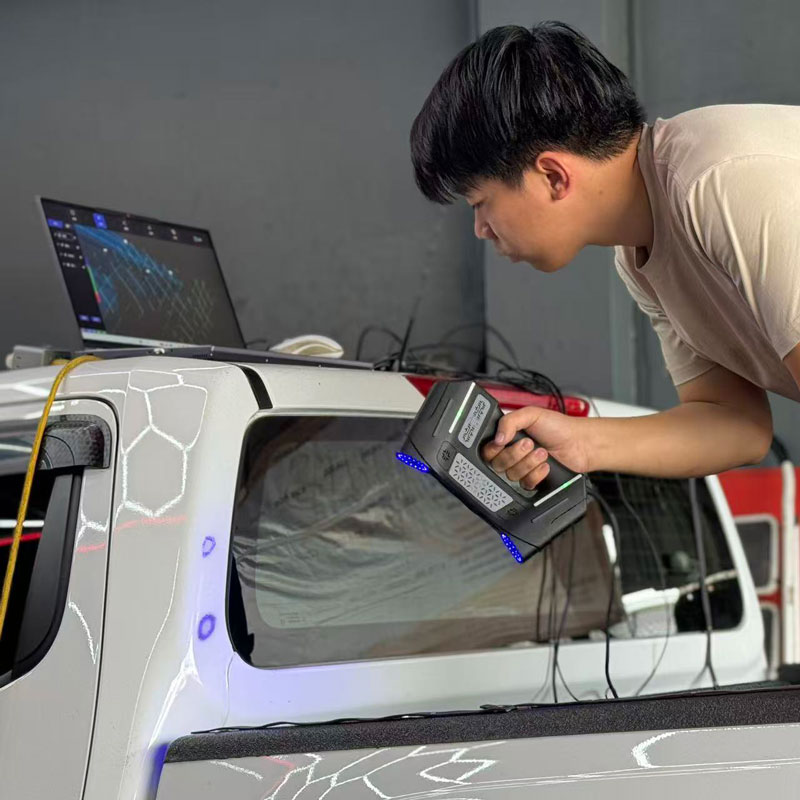
For vehicle-specific TPE car mats, the first step is collecting accurate dimensional data from the vehicle interior.
Using 3D scanning technology, engineers capture the shape and dimensions of the footwell, including areas such as:
- Floor contours
- Transmission tunnels
- Seat rail areas
- Pedal zones
- Side walls
- Factory fixing points
The scan data is then converted into a digital 3D model.
Engineers can use this model to define the shape of the mat, edge height, drainage channels, anti-slip structures, fixing positions, and other design details.
A. Why does 3D scanning matter?
Fitment is one of the most important factors when sourcing custom TPE car mats.
Inaccurate measurements may result in gaps, interference with interior components, incorrect fixing positions, or poor coverage.
Accurate vehicle data helps reduce these problems before mold production begins.
For buyers developing mats for multiple vehicle models, access to a broad vehicle data library can also shorten development time for new applications.
Step 2: Mold Development
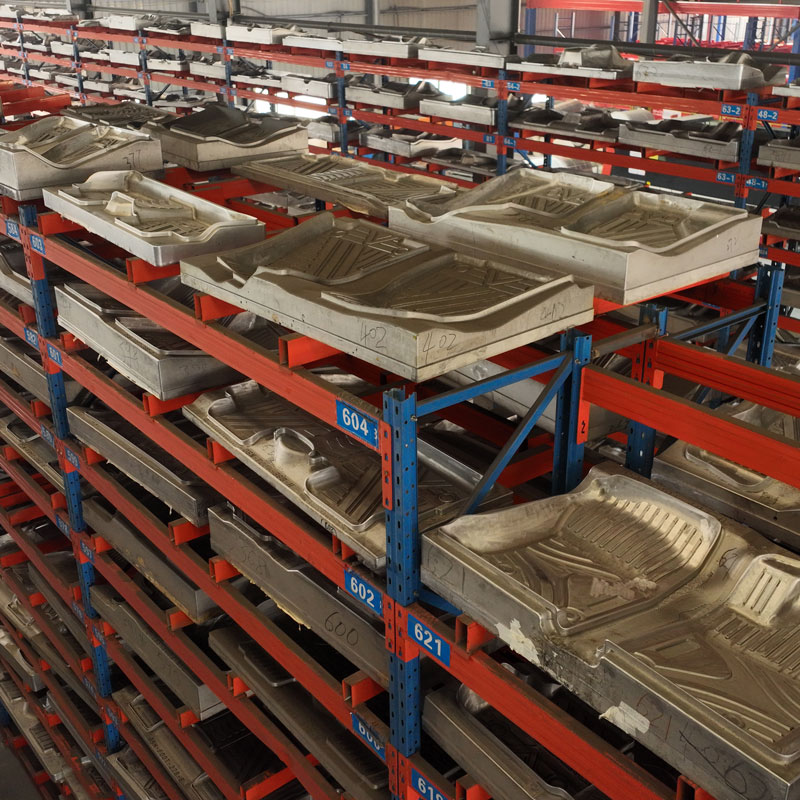
Once the digital design is confirmed, the next stage is mold development.
The finalized 3D model is converted into mold data and manufactured using precision machining processes such as CNC machining.
The mold determines many characteristics of the finished TPE floor mat, including:
- Overall dimensions
- Edge height
- Surface texture
- Water channels
- Anti-slip patterns
- Reinforced areas
- Logo positions
- Fixing structures
This is why mold accuracy has a direct impact on the consistency of the final product.
For OEM or customized projects, buyers should confirm key product specifications before mold production, especially vehicle model, dimensions, surface pattern, branding requirements, and functional design.
Step 3: TPE Material Preparation
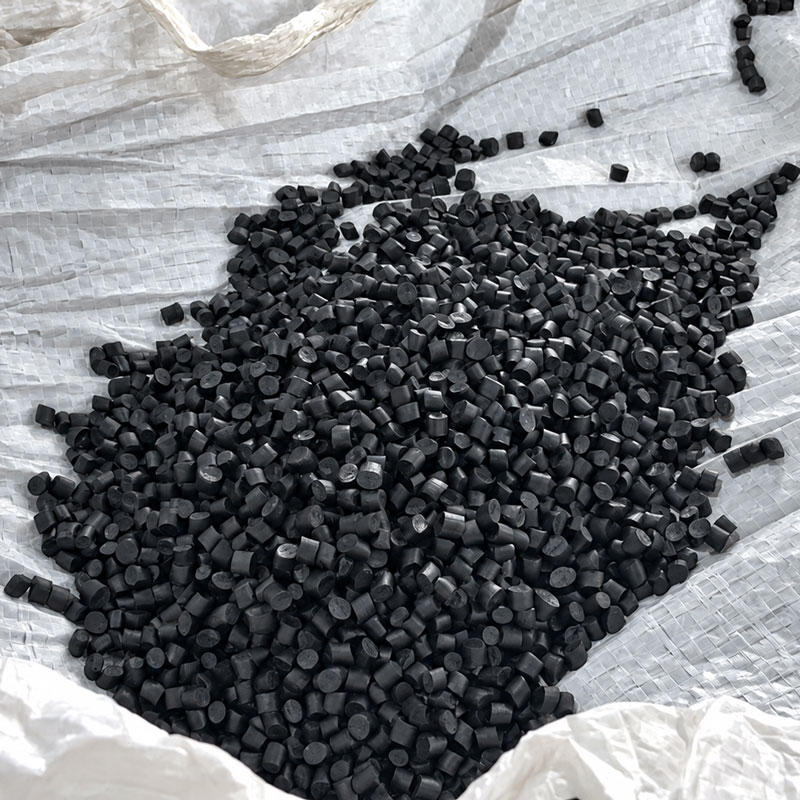
Before molding, the TPE raw material is prepared according to the required product specifications.
Depending on the formulation and production requirements, the material may be blended with masterbatch or functional additives to achieve the desired:
- Color
- Flexibility
- Surface appearance
- Odor performance
- UV resistance
- Temperature resistance
Material consistency is particularly important for repeat B2B orders.
For distributors, noticeable differences in color, hardness, texture, or odor between production batches can create quality-control problems in the market.
Maintaining standardized material preparation procedures helps improve batch-to-batch consistency.
Step 4: Thermoforming
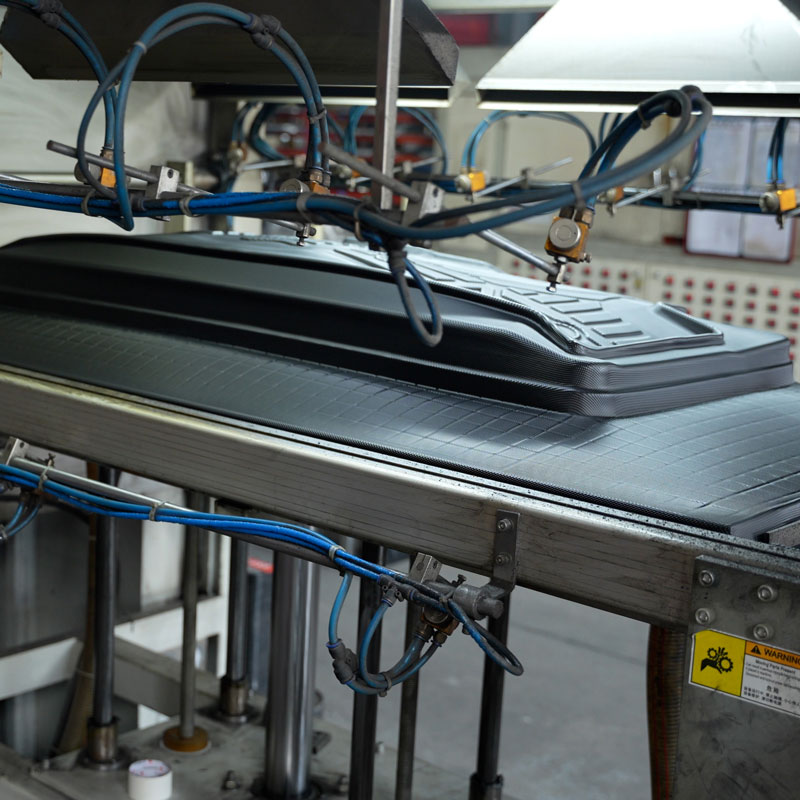
Thermoforming is an important stage in the TPE car mat manufacturing process.
A pre-extruded TPE sheet is heated to a suitable forming temperature until it becomes flexible. The softened sheet is then placed over a mold, where vacuum pressure or a combination of vacuum and mechanical pressure shapes it to match the mold surface.
This process forms the main structure of the car floor mat, including its contours, raised edges, drainage channels, surface textures, and other functional features.
Several production factors can influence the final result:
1. Heating Temperature
Proper heating ensures that the TPE sheet reaches the required forming temperature, allowing it to stretch evenly and reproduce the mold details accurately.
2. Vacuum Pressure
Appropriate vacuum pressure helps the softened TPE sheet conform closely to the mold, ensuring accurate contours and well-defined functional features.
3. Mold Temperature and Cooling Time
Controlled mold temperature and cooling time help the formed mat retain its shape, maintain dimensional stability, and reduce deformation after forming.
4. Sheet Thickness and Material Distribution
Consistent sheet thickness and uniform material distribution help maintain structural integrity, minimize thin spots in stretched areas, and achieve a more consistent finished product.
Together, these factors help determine the finished car mat’s shape, surface quality, dimensional accuracy, and vehicle fitment.
Step 5: Surface Texture and Functional Design
Surface design is not only about appearance.
For automotive floor mats, texture and structural patterns can also affect grip, cleaning, water containment, and long-term appearance.
Common TPE car mat surface designs include:
- Diamond patterns
- Fine-grain textures
- Anti-slip structures
- Raised channels
- Water-containment grooves
- Custom embossed logos
Many of these features can be integrated directly into the mold so that they are formed during the injection molding process.
For customized projects, buyers can work with the manufacturer to develop surface patterns that match their product positioning or brand identity.
For example, a rugged all-weather mat may use deeper channels and more aggressive textures, while a premium interior product may use finer patterns and cleaner visual details.
Step 6: Trimming and Finishing
After molding and cooling, the TPE mat is removed from the mold and transferred to the finishing stage.
Any excess material generated during the molding process is trimmed away.
Operators also inspect the edges and visible surfaces to make sure the product meets the required appearance standard.
Depending on the product design, additional finishing operations may include:
- Edge trimming
- Surface cleaning
- Logo inspection
- Fixing-component installation
- Accessory assembly
- Final shape correction
Careful finishing is particularly important for custom-fit products because uneven edges or excess material can affect installation.
Step 7: Quality Inspection
Quality control is a critical stage before packaging.
Although inspection procedures vary between manufacturers and product specifications, typical checks for TPE automotive floor mats may include:
1.Dimensional Inspection
The TPE car mat is checked against the required dimensions or approved sample to confirm fitment-related specifications.
2.Appearance Inspection
Inspectors check for visible defects such as:
- Surface marks
- Incomplete molding
- Color inconsistencies
- Deformation
- Irregular texture
- Excess material
3.Structural Inspection
Critical areas such as edges, fixing points, anti-slip structures, and reinforced sections can be checked for proper formation.
4.Batch Consistency
For larger orders, consistency between products and production batches is especially important.
A structured QC process helps reduce the risk of defective products reaching distributors, retailers, or end customers.

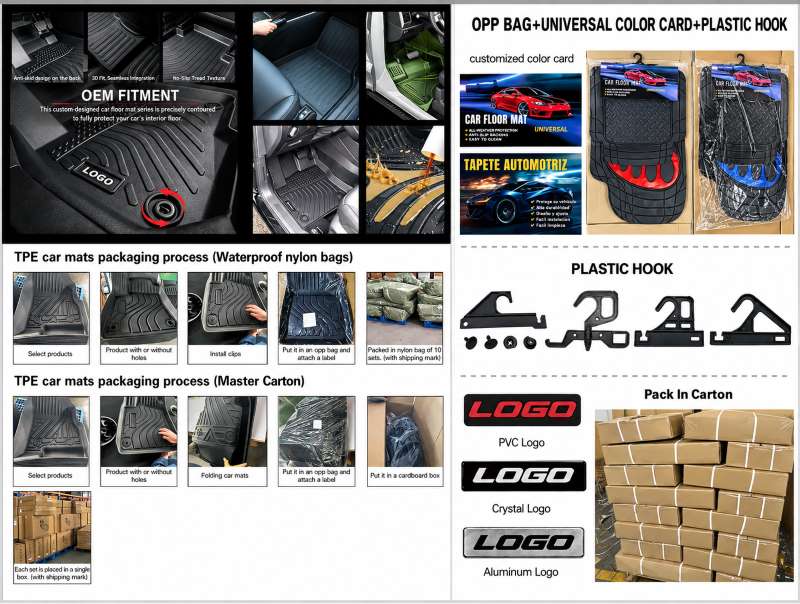
Step 8: Packaging and Shipment Preparation
Once the mats pass inspection, they are cleaned and prepared for packaging.
Packaging should protect the product from scratches, contamination, excessive compression, and deformation during storage and international transportation.
Different B2B customers may require different packaging solutions, such as:
- Bulk export packaging
- Individual product packaging
- Retail-ready packaging
- Custom color boxes
- Private-label packaging
- Customized labels and barcodes
For OEM/ODM projects, packaging can also be developed according to the buyer’s branding and distribution requirements.
What Determines the Quality of a TPE Car Mat?
Two TPE mats may look similar in photos but perform differently after installation and long-term use.
For B2B buyers, several factors are worth evaluating.
Quality Factor | Why It Matters |
Vehicle Data Accuracy | Determines fitment and coverage |
Mold Precision | Affects dimensions, edges, textures, and details |
TPE Material Consistency | Influences flexibility, odor, appearance, and durability |
Injection Molding Control | Affects deformation, shrinkage, and surface quality |
Surface Design | Influences grip, water containment, cleaning, and appearance |
Quality Inspection | Helps maintain consistency across production batches |
Packaging | Reduces damage and deformation during transportation |
This is why evaluating a TPE car mat manufacturer should involve more than comparing unit prices.
The production process behind the product is equally important.
What Should B2B Buyers Ask a TPE Car Mat Manufacturer?
When sourcing TPE car mats in bulk or developing a custom product line, asking the right questions can help you evaluate suppliers more effectively.
1. How do you obtain vehicle fitment data?
Ask whether the supplier uses 3D scanning, existing vehicle databases, physical samples, or another development method.
2. Can you develop mats for specific vehicle models?
If your business targets particular markets, confirm whether the supplier can support the vehicle models commonly sold in those regions.
3. What customization options are available?
Depending on your project, customization may include:
- Colors
- Surface textures
- Logos
- Patterns
- Packaging
- Labels
- Product specifications
4. How do you control batch consistency?
For repeat orders, consistency in dimensions, color, texture, and material performance is essential.
5. What is the sample development process?
Before placing a large order, clarify sample lead time, revision procedures, mold requirements, and approval standards.
6. What quality inspections are performed before shipment?
Ask how the supplier checks dimensions, appearance, molding quality, packaging, and other specifications relevant to your project.
OEM & Custom TPE Car Mat Manufacturing
For car accessory brands and distributors, OEM/ODM manufacturing makes it possible to develop products for specific markets rather than relying entirely on standard catalog items.
Depending on the project, a custom TPE car mat program may include:
- Vehicle-specific development
- 3D scanning and digital modeling
- Custom mold development
- Custom colors
- Surface pattern customization
- Embossed branding
- Packaging customization
- Private labeling
- Multi-model product development
Before starting a custom project, buyers should provide as much information as possible about the target market, vehicle models, required specifications, expected order quantity, branding requirements, and packaging needs.
Clear specifications at the beginning of the project can reduce unnecessary revisions later.
TPE Car Mat Manufacturing: From Vehicle Data to Finished Product
The complete TPE car mat manufacturing process can be summarized as:
3D Vehicle Scanning → Digital Design → Mold Development → Material Preparation → Injection Molding → Trimming & Finishing → Quality Inspection → Packaging
Each stage contributes to the final product.
Accurate vehicle data improves fitment. Precise molds reproduce product details. Stable material preparation improves consistency. Controlled molding reduces defects. Quality inspection helps ensure that finished products meet the agreed specifications.
For B2B buyers, understanding these steps makes it easier to compare suppliers based on actual manufacturing capabilities rather than price alone.

Looking for a TPE Car Mat Manufacturer?
If you are sourcing TPE car mats for wholesale, choosing a supplier with vehicle development, molding, customization, and quality-control capabilities can simplify the sourcing process.
AUDLY supports B2B automotive accessory buyers with customized TPE car mat solutions for different vehicle models and market requirements.
Our customization services can include:
- Custom vehicle fitment
- OEM/ODM development
- Logo customization
- Color and texture options
- Private-label packaging
- Wholesale and bulk-order support
Contact us with your target vehicle models, market, estimated quantity, and customization requirements to discuss your TPE car mat project.