
Polyester is one of the most commonly used synthetic fabrics in automotive seat covers. Its affordability, design flexibility, and practical performance make it a popular material for everyday vehicle interior protection.
But are polyester car seat covers actually good? How durable are they compared with leather, PU, or neoprene? And what should buyers consider when choosing polyester seat covers for retail or wholesale distribution?
The answer depends on fabric construction, material quality, manufacturing processes, and intended use. While polyester may not offer the premium appearance of genuine leather or the specialized properties of neoprene, it provides a practical combination of comfort, versatility, and cost efficiency.
In this guide, we explore the properties, advantages, limitations, and applications of polyester car seat covers, helping consumers and B2B buyers make more informed product decisions.
1. What Is Polyester Fabric Used in Car Seat Covers?
Polyester is a synthetic fiber made primarily from petroleum-based polymers. It is widely used in textiles because of its strength, dimensional stability, relatively low moisture absorption, and versatility.
In automotive seat cover manufacturing, polyester can be processed into different fabric constructions to achieve various textures, appearances, and performance characteristics.
Common Types of Polyester Fabrics
The fabric construction plays an important role in determining the final performance of a polyester car seat cover.
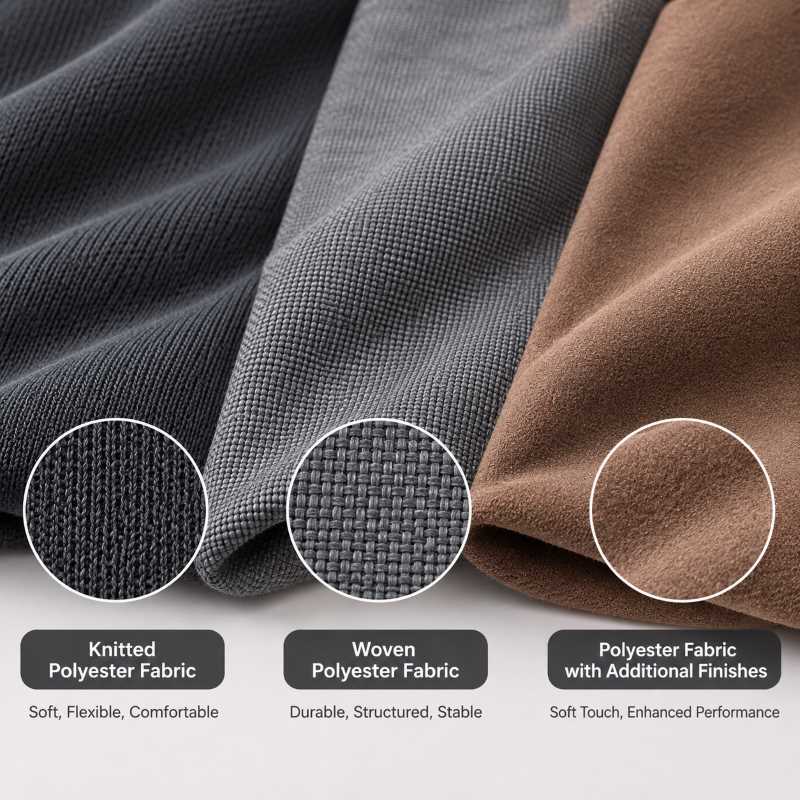
- Knitted Polyester Fabric
Knitted polyester is made by interlocking yarn loops to create a flexible fabric structure.
Its main characteristics include:
- Soft texture and comfortable surface feel.
- Good flexibility and adaptability.
- A variety of textures and patterns.
- Suitability for different car seat cover designs.
Knitted polyester is commonly used in everyday car seat covers where comfort, appearance, and flexibility are important.
- Woven Polyester Fabric
Woven polyester is produced by interlacing yarns in horizontal and vertical directions.
Its characteristics include:
- Relatively stable fabric structure.
- Good dimensional stability when properly constructed.
- Different weave patterns and surface textures.
- Suitability for products requiring a more structured appearance.
Depending on yarn quality and fabric density, woven polyester can offer different levels of abrasion resistance and durability.
- Polyester Fabric with Additional Finishes
Some polyester fabrics undergo additional treatments or are combined with other materials to improve their appearance and functionality.
Examples include:
- Brushed finishes for a softer surface.
- Water-repellent treatments to reduce liquid penetration.
- Laminated layers for additional structural support.
- Printed patterns for decorative designs.
These treatments can expand the design possibilities of polyester car seat covers. However, their actual performance depends on the specific materials and manufacturing processes used.
It is important to remember that polyester describes the fiber composition, not a guaranteed level of product performance. Fabric weight, density, construction, finishing, and backing all influence the quality of the finished car seat cover.
2. Pros and Cons of Polyester Car Seat Covers
Polyester car seat covers offer several practical advantages, but they also have limitations. Understanding both sides helps buyers select products that match their target customers and intended applications.
Advantages of Polyester Car Seat Covers
- Affordable and Cost-Effective
One of the biggest advantages of polyester is its relatively accessible material cost.
Compared with many genuine leather and premium synthetic leather products, polyester car seat covers can provide a more budget-friendly car interior protection solution.
This makes them suitable for entry-level and mid-range product lines, particularly for customers who prioritize practicality and affordability.
- Wide Range of Designs and Colors
Polyester is highly versatile in textile manufacturing. It can be produced in different colors, textures, patterns, and fabric weights.
Car seat cover manufacturers can develop various designs, including:
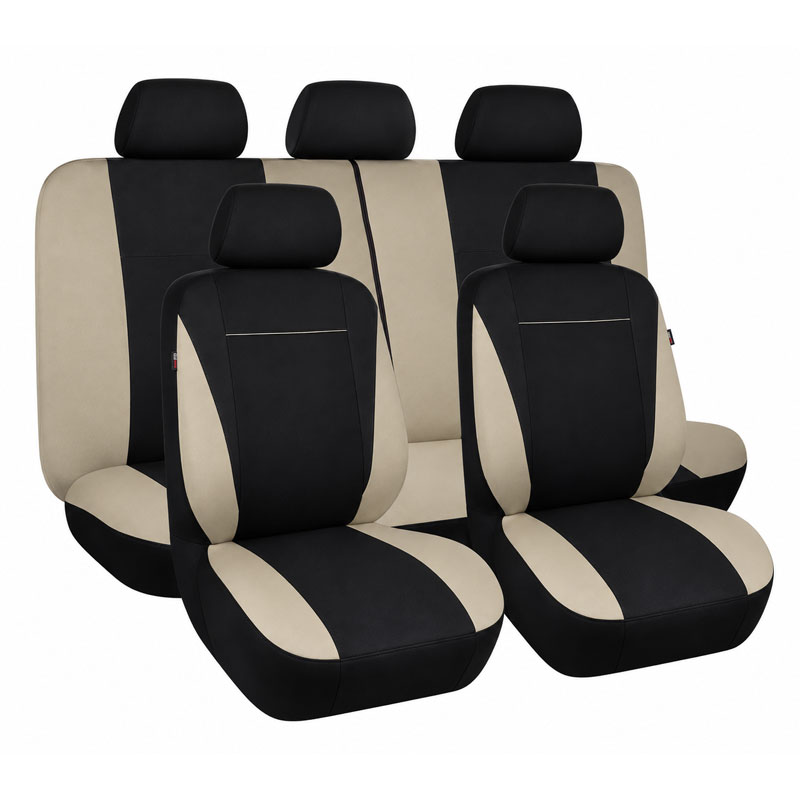
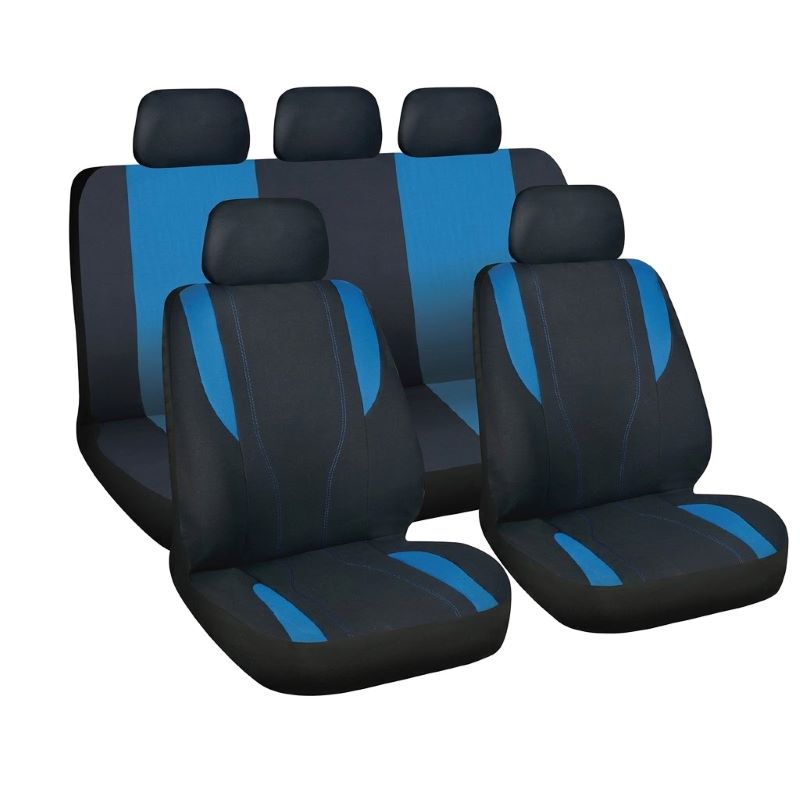
- Solid-color car seat covers.
- Two-tone fabric combinations.
- Patterned and printed seat covers.
- Textured and padded designs.
- Sport-inspired interior styles.
This flexibility gives automotive aftermarket brands more options when developing differentiated product collections.
- Good Everyday Durability
Well-constructed polyester fabrics can provide good resistance to routine abrasion, stretching, and everyday wear.
Their performance depends on yarn quality, fabric density, stitching, and reinforcement.
For daily-use vehicles, properly manufactured polyester car seat covers can offer a practical solution for protecting original upholstery.
- Relatively Easy Maintenance
Many polyester fabrics are relatively easy to maintain compared with some delicate upholstery materials.
Depending on the fabric construction and finishing, surface dirt can often be removed through routine cleaning.
However, polyester is not automatically waterproof or stain-proof. Buyers should check whether the fabric has received additional protective treatment and follow the car seat cover manufacturer’s cleaning recommendations.
- Relatively Low Moisture Absorption
Polyester generally absorbs less moisture than many natural textile fibers.
This characteristic can help the fabric dry relatively quickly after light moisture exposure.
However, low moisture absorption does not mean that a polyester car seat cover is waterproof. Water can still pass through the fabric structure, seams, or uncovered areas.
Disadvantages of Polyester Car Seat Covers
Despite its advantages, polyester is not suitable for every application.
- Breathability Depends on Fabric Construction
Polyester is not necessarily breathable simply because it is a textile material. Fabric density, thickness, weave or knit structure, coatings, and backing all affect airflow. Dense or laminated polyester constructions may offer less breathability than lightweight, open-structure fabrics.
- Limited Premium Appearance
Basic polyester car seat covers may not provide the same appearance or tactile experience as genuine leather or high-quality synthetic leather.
For customers seeking a luxury interior upgrade, leather-look or premium textured materials may be more appealing.
- Potential Fading Under Prolonged Sunlight
Long-term exposure to sunlight and ultraviolet radiation can contribute to fabric fading and degradation. The degree of resistance depends on the dye system, UV stabilizers, fabric quality, and exposure conditions.
For vehicles frequently exposed to strong sunlight, buyers should consider colorfastness and UV resistance when evaluating polyester car seat covers.
- Not Naturally Waterproof
Standard polyester fabric does not provide complete protection against liquid penetration. Although water-repellent finishes and laminated constructions can improve resistance, their effectiveness varies.
Customers who require stronger liquid protection should evaluate the complete product construction rather than relying on the polyester material label alone.
3. How Durable Are Polyester Car Seat Covers?
Durability is one of the most important considerations when selecting automotive seat cover materials.
Polyester can provide reliable everyday performance, but its durability depends on several factors beyond fiber composition.
Here are the key performance characteristics buyers should evaluate.
- Abrasion Resistance
Car seat covers experience repeated friction from passengers getting in and out of vehicles.
Polyester fabrics with suitable yarn quality and construction can withstand routine abrasion.
For commercial sourcing, buyers can request abrasion resistance test results to compare different fabric options.
- Colorfastness
Car seat covers are exposed to sunlight, friction, cleaning products, and everyday use.
Good colorfastness helps reduce fading and color transfer during normal use.
Manufacturers should evaluate colorfastness according to the intended application and relevant testing standards.
- Pilling Resistance
Pilling occurs when small fiber balls form on the fabric surface after repeated friction.
The tendency to pill depends on fiber characteristics, yarn construction, fabric structure, and finishing.
For products intended for frequent use, pilling resistance is an important quality consideration.
- Stitching and Seam Strength
Even high-quality polyester fabric can result in a poor product if the stitching and seams are weak.
Seat covers need to withstand repeated movement, tension, and installation.
Reinforced stitching and appropriate seam construction help improve product reliability and reduce the risk of seam failure.
- UV Resistance
Prolonged sunlight exposure can affect both the appearance and physical properties of polyester fabrics.
For products designed for vehicles operating in sunny environments, UV resistance and colorfastness should be considered during material selection.
How Can Buyers Evaluate Polyester Seat Cover Quality?
For distributors and aftermarket brands, it is better to evaluate measurable specifications than rely solely on general descriptions such as premium polyester or high-quality fabric.
Important evaluation points include:
- Fabric weight (GSM).
- Fabric thickness.
- Abrasion resistance.
- Pilling resistance.
- Seam strength.
- Dimensional stability.
These specifications provide a more reliable basis for comparing suppliers and maintaining consistent product quality.
4. Polyester vs. Other Car Seat Cover Materials
Polyester is only one of several materials used in automotive seat cover manufacturing.
Other common options include PU leather, genuine leather, PVC, and neoprene.
Each material offers different advantages depending on the desired appearance, comfort, durability, maintenance requirements, and price positioning.
Polyester vs. PU Leather
PU leather is a synthetic leather material made using a polyurethane surface layer, typically supported by a textile backing.
Compared with polyester fabric, PU leather generally provides a smoother, leather-like appearance.
- Polyester:Offers more textile textures, flexibility in fabric design, and a practical price positioning.
- PU Leather:Provides a leather-like appearance and a relatively smooth surface that is generally easier to wipe clean.
Polyester may be suitable for customers who prefer a fabric seating experience, while PU leather is often selected for more refined interior styling.
Polyester vs. Genuine Leather
Genuine leather is a natural material valued for its distinctive grain, appearance, and premium positioning.
Compared with polyester:
- Polyester:Generally more affordable and available in a wider range of textile colors and patterns.
- Genuine Leather:Offers a distinctive natural appearance and premium positioning but usually requires a higher purchasing budget and more specialized care.
For everyday aftermarket applications, polyester can be a practical alternative for customers who do not require genuine leather.
Polyester vs. Neoprene
Neoprene is a synthetic rubber material known for its flexibility and water-resistant properties.
Its material characteristics differ significantly from those of ordinary polyester fabric.
- Polyester:Commonly used for everyday seat covers, with flexible design options and accessible pricing.
- Neoprene:Often selected for applications where flexibility, cushioning, and resistance to water exposure are important.
Neoprene may be more suitable for certain outdoor-oriented applications, while polyester offers more conventional textile design options.
Polyester vs. PVC
PVC is a synthetic polymer commonly used in automotive upholstery and protective products.
Compared with polyester fabric:
- Polyester:Provides a textile surface with different weave and knit structures.
- PVC:Can provide a smooth, coated surface with good resistance to liquid penetration, depending on its construction.
PVC products may be easier to wipe clean, while polyester can offer a more traditional fabric seating experience.
Comparison Table: Different Car Seat Cover Materials
Material | Main Advantages | Main Limitations |
Polyester | Affordable, versatile, multiple designs | Performance varies by fabric construction |
PU Leather | Leather-like appearance, easy surface cleaning | Can be affected by heat and surface wear |
Genuine Leather | Premium appearance, distinctive texture | Higher cost, requires maintenance |
Neoprene | Flexible, water-resistant properties | Different appearance and price positioning |
PVC | Smooth surface, liquid protection | Can feel less breathable |
There is no universally best material for every vehicle or customer segment.
The right choice depends on product positioning, target retail price, expected usage, and customer preferences.
5. What Should B2B Buyers Consider When Sourcing Polyester Car Seat Covers?
For automotive wholesalers, importers, distributors, and private-label brands, selecting polyester car seat covers involves more than comparing quotations.
Product specifications, manufacturing consistency, customization capabilities, and supplier reliability all influence the final purchasing decision.
Here are several important factors to consider.
- Fabric Weight and Thickness
Fabric weight, usually measured in GSM (grams per square meter), is an important specification when comparing polyester materials.
Different fabric weights can affect the product’s appearance, hand feel, thickness, and overall construction.
However, higher GSM does not automatically mean better quality. Buyers should evaluate fabric weight together with yarn quality, fabric density, and intended application.
- Fabric Construction and Surface Texture
Different knitting and weaving structures create different surface appearances and performance characteristics.
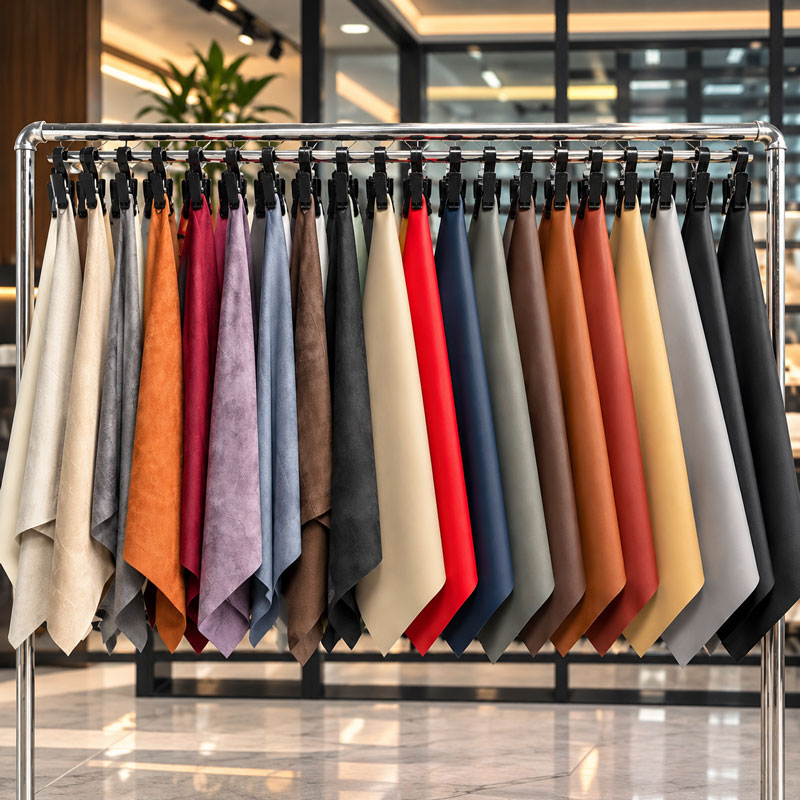
Buyers should confirm the actual fabric construction and request samples before placing bulk orders.
This helps ensure that the selected material meets the desired product positioning.
- Padding and Stitching Quality
Padding can improve seating comfort and give car seat covers a fuller appearance.
Stitching quality also affects the finished product’s durability and visual consistency.
When evaluating samples, buyers should check:
- Padding thickness and uniformity.
- Seam alignment.
- Stitch density and consistency.
- Reinforced areas.
- Edge finishing.
- Vehicle Compatibility and Seat Design
Vehicle compatibility is essential when sourcing automotive seat covers.
Universal-fit products can simplify inventory management, but they may not provide precise coverage for every vehicle model.
Semi-custom and vehicle-specific designs can offer better compatibility with different seat shapes.
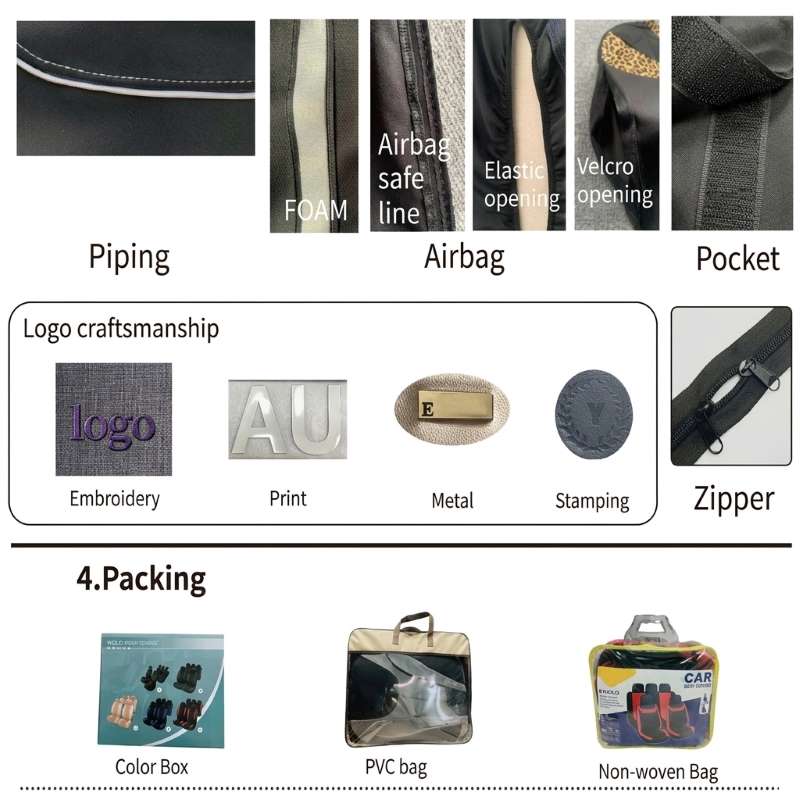
Buyers should also confirm compatibility with headrests, armrests, seat belts, side airbags, and other integrated seat features.
For seats equipped with side airbags, the cover design must be specifically developed and validated for the intended application. Generic fit claims should not replace appropriate compatibility and safety verification.
- OEM and ODM Customization
For aftermarket brands and distributors, customization is an important way to establish product differentiation.
Depending on the car seat cover manufacturer’s capabilities, customization options may include:
- Fabric colors and patterns.
- Logo embroidery or printing.
- Custom stitching and design details.
- Packaging and labeling.
- Product sets and accessories.
- Customized sizing and vehicle fitment.
A capable car seat cover manufacturer should be able to discuss material options, design requirements, sample development, and production feasibility.
- MOQ and Production Capacity
Minimum order quantity (MOQ) is another important consideration for B2B purchasing.
Different materials, designs, colors, and customization requirements may have different MOQ requirements.
Buyers should confirm production lead times, sample availability, monthly production capacity, and quality inspection procedures before confirming an order.
A reliable car seat cover supplier should provide clear communication throughout sampling, production, and order fulfillment.
6. Are Polyester Car Seat Covers the Right Choice?
Yes. Polyester car seat covers can be a good choice for customers looking for affordable, versatile, and practical automotive interior protection.
They are particularly suitable for:
- Everyday passenger vehicles.
- Entry-level and mid-range aftermarket products.
- Customers who prefer textile seating surfaces.
- Retailers looking for different colors and fabric designs.
- Distributors developing budget-friendly product collections.
However, polyester may not be the best option for every application. Customers seeking a premium leather appearance, stronger liquid protection, or specialized material performance may prefer PU leather, genuine leather, neoprene, or other alternatives.
For B2B buyers, the most important consideration is matching the material specifications with the intended market and customer expectations.
A well-designed polyester car seat cover should combine suitable fabric construction, reliable stitching, appropriate padding, and proper vehicle compatibility.
Choosing the Right Car Seat Cover Manufacturer
Beyond material selection, working with a reliable car seat cover manufacturer is essential for maintaining consistent product quality and building a competitive product range.
Whether you are sourcing universal-fit polyester seat covers or developing customized automotive seat cover collections, evaluating a supplier’s material options, production capabilities, quality control, and OEM/ODM services can help reduce sourcing risks.
At AUDLY, we provide automotive seat cover solutions for distributors, wholesalers, and aftermarket brands, with product options and customization support designed around different sourcing requirements.