
Side airbags are an important part of modern vehicle safety systems. However, installing a car seat cover over a seat equipped with a side airbag can affect how the airbag deploys if the cover is not properly designed.
For car seat cover manufacturers, wholesalers, importers, and automotive aftermarket brands, airbag compatibility is therefore more than a product feature. It is a design, manufacturing, and quality-control consideration that deserves careful attention throughout the supply chain.
So, how can a car seat cover be designed to accommodate a side airbag? What role do stitching techniques, material selection, specialized sewing equipment, and factory quality control play?
This guide explains the key engineering principles and manufacturing processes behind airbag-compatible car seat covers, helping B2B buyers evaluate suppliers and product specifications more effectively.
1. Why Does Airbag Compatibility Matter in Car Seat Covers?
A. How Do Seat-Mounted Side Airbags Work?
Seat-mounted side airbags are commonly housed inside the outer side bolster of a front seatback. When the vehicle’s airbag control system detects a qualifying crash, the airbag inflates fast. It deploys through a designated opening or seam in the seat assembly.
According to the U.S. National Highway Traffic Safety Administration (NHTSA), side airbags are designed to help protect occupants during certain side-impact crashes. Their proper operation depends on the vehicle’s original safety-system design.
When an aftermarket car seat cover is installed, its material, stitching, construction, and positioning may influence the airbag’s ability to deploy as intended.
For example, a cover that uses unsuitable reinforcement, excessive material at the deployment zone, or an incorrectly positioned seam may create additional resistance during deployment.
This is why vehicle manufacturers may restrict aftermarket car seat covers or require specific approved products for certain models.
B. Why Are Standard Car Seat Covers Not Always Suitable?
Most conventional car seat covers are primarily designed for appearance, comfort, durability, and ease of installation. These priorities do not automatically address the technical requirements of a seat-mounted airbag.
Potential compatibility issues include:
- Incorrect seam construction:Conventional stitching may not release in the manner required by the seat’s airbag system.
- Excessive reinforcement:Additional layers, padding, or reinforced seams may alter the resistance at the deployment zone.
- Incorrect fitment:A car seat cover designed for a different seat configuration may place its opening or seam in the wrong position.
- Inconsistent production:Variations in thread strength, stitch density, and seam construction may affect the repeatability of the intended release behavior.
Not every conventional car seat cover will necessarily interfere with an airbag, but its appearance or fit alone cannot establish compatibility.
For B2B buyers, the key question is whether the product has been designed and appropriately evaluated for the specific seat and airbag configuration.
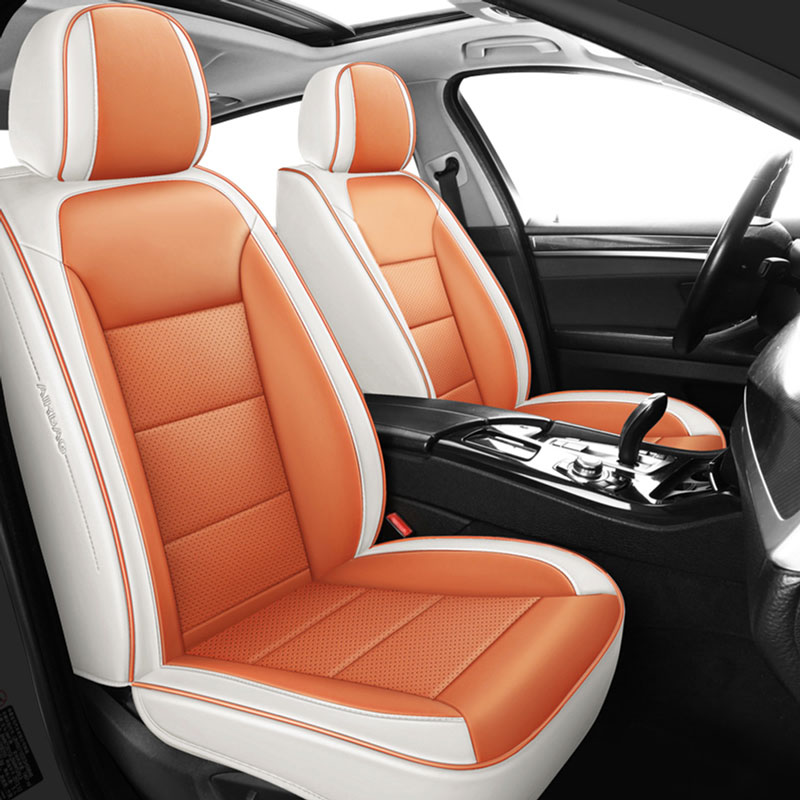
2. The Engineering Behind Airbag-Compatible Car Seat Covers
2.1 Designed Release Seams
One established approach to accommodating seat-mounted side airbags is the use of a specially engineered release seam, often referred to as an airbag tear seam.
Unlike an ordinary decorative or structural seam, this seam is designed to separate under the intended deployment conditions while maintaining adequate integrity during normal use.
Its performance depends on several interacting variables:
- Thread material and tensile properties
- Stitch type and stitch density
- Seam construction and length
- Fabric strength and thickness
- Seam location relative to the airbag’s deployment path
- The overall geometry and construction of the car seat cover
The objective is to create a seam that remains intact during ordinary use but releases in a controlled and repeatable manner when required.
However, there is no single thread type, stitch length, or seam design that is suitable for every vehicle. Specifications must be established and evaluated for the intended application.
2.2 Accurate Deployment-Zone Positioning
A release seam can only serve its intended function if it is positioned correctly.
During product development, the car seat cover manufacturer needs to understand the original seat’s construction, the airbag’s location, and the way the airbag exits the seat assembly.
This may require reference seats, original car seat-cover samples, vehicle-specific measurements, technical documentation, and prototype fitting.
A car seat cover that fits the general shape of a car seat may still be unsuitable if its release seam does not correspond to the intended deployment area.
For custom-fit car seat covers, vehicle make, model, model year, trim level, and seat configuration may all be relevant to the fitment specification.
2.3 Material and Layer Construction
Material selection is another important part of the design process.
Automotive seat covers may use PU leather, PVC, polyester fabrics, mesh, foam-backed materials, or combinations of different materials. Each material has its own characteristics, including tensile strength, elongation, thickness, tear resistance, and seam behavior.
These properties influence how the material responds to stress and how it interacts with the stitching during deployment.
A suitable material specification should therefore consider:
- Mechanical properties:Tensile strength, tear resistance, and elongation.
- Material thickness and layering:Whether the construction introduces additional resistance at the release zone.
- Seam performance:How the selected material behaves with the specified thread and stitch construction.
- Durability:Whether the material and seam maintain their required properties after normal use and relevant conditioning.
There is no universal fabric-weight range that automatically makes a car seat cover airbag-compatible. A lightweight fabric is not necessarily compatible, and a heavier material is not automatically unsuitable. The complete material-and-seam combination must be evaluated against the intended design requirements.
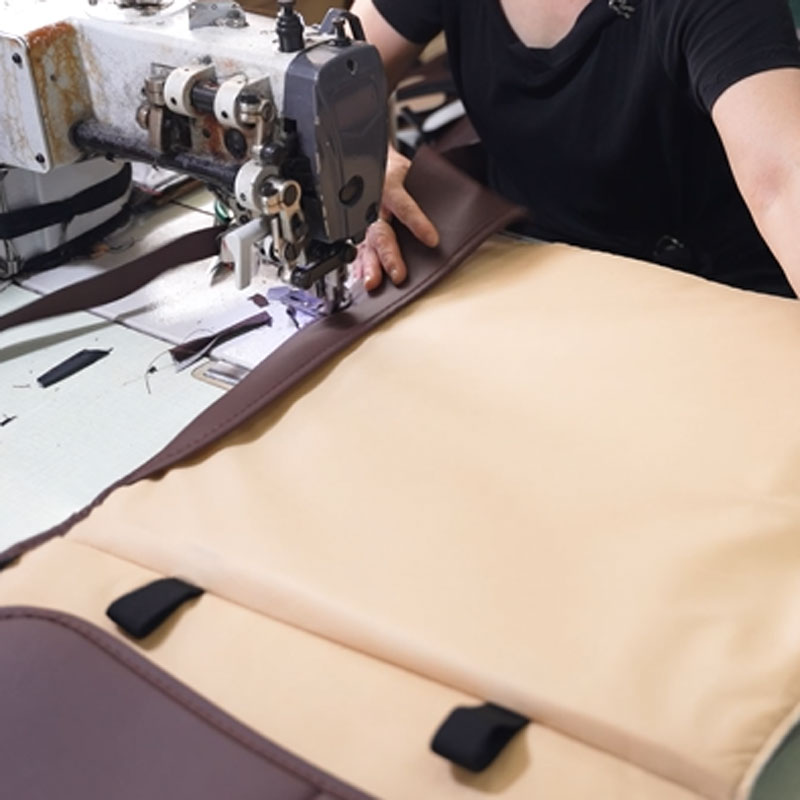
3. How Factory Production Technology Supports Airbag Compatibility
For automotive seat cover manufacturers, achieving consistent seam performance requires more than choosing the right materials. It also requires controlled production processes, suitable equipment, trained operators, and documented inspection procedures.
3.1 Computerized Sewing Machines and Parameter Control
Specialized computerized sewing equipment can help car seat cover manufacturers maintain consistent stitching parameters across production runs.
Depending on the machine and production setup, programmable controls may regulate or monitor parameters such as stitch length, sewing speed, and other process settings.
For airbag release seams, these controls can help reduce unintended variation between products.
Important manufacturing considerations include:
- Consistent stitch spacing and seam length
- Correct thread type and thread tension
- Repeatable sewing paths and seam positioning
- Defined setup procedures for different product specifications
- Recorded production parameters and inspection results
A computerized sewing machine does not, by itself, guarantee airbag compatibility. Its value lies in reproducing a previously established and validated seam specification with greater process consistency.
For buyers evaluating a car seat cover supplier, it is worth asking whether the factory has dedicated sewing procedures for release seams and how it controls deviations from approved production parameters.
3.2 Specialized Stitching Tools and Process Fixtures
Depending on the product design, sewing guides, positioning fixtures, templates, and dedicated machine setups may be used to help maintain seam alignment and repeatability.
These tools can be particularly useful when a car seat cover has a designated deployment zone that must remain consistent across different production batches.
A well-controlled setup can help operators maintain the specified seam position and reduce variation caused by manual alignment.
However, the appropriate tooling depends on the product construction. Not every car seat cover requires the same equipment, and a factory should select its tooling based on the validated manufacturing process rather than relying on equipment names as proof of capability.
3.3 Pattern-Making and Digital Design
Before mass production, the car seat cover pattern must accommodate the seat’s geometry and relevant functional areas.
Digital pattern-making tools and CAD software can support dimensional control, pattern revisions, and the development of vehicle-specific components.
The development process may include:
- Collecting vehicle and seat reference information.
- Identifying the airbag deployment area and other functional constraints.
- Developing the seat-cover pattern and designated release-seam position.
- Producing prototype samples.
- Checking fitment and seam placement against the design specification.
- Revising the pattern and production instructions where necessary.
Digital pattern-making improves design repeatability, but it cannot replace physical evaluation of the finished product where deployment performance needs to be verified.
3.4 In-Process Inspection and Traceability
Manufacturing consistency is especially important when seam performance depends on specific combinations of materials, threads, and stitching parameters.
A structured quality-control system can include:
- Incoming inspection of specified fabrics and threads
- Verification of sewing-machine setup
- Inspection of seam position, stitch density, and seam dimensions
- Checks for unintended reinforcement or material accumulation
- Batch records linking finished products to production specifications
- Procedures for handling nonconforming products and production changes
Where relevant testing has established critical seam parameters, the factory should control those parameters throughout production.
Traceability also helps manufacturers investigate quality issues, identify affected batches, and determine whether a material or process change requires further evaluation.

4. How to Evaluate Airbag-Compatible Car Seat Covers During Product Development
A responsible product-development process should connect design decisions with appropriate verification. The following workflow illustrates how car seat cover manufacturers and B2B buyers can evaluate a proposed seat-cover design.
Step 1: Confirm the Target Vehicle and Seat Configuration
Begin by identifying the intended vehicle applications.
Collect the relevant information about the make, model year, trim level, seatback design, airbag configuration, and any restrictions specified by the vehicle manufacturer.
A universal-fit product should not automatically be assumed to accommodate every seat-mounted airbag system.
Step 2: Develop the Material and Seam Specification
Select the proposed cover materials and define the release-seam construction.
Document the relevant material properties, thread specifications, stitch parameters, seam dimensions, and intended deployment location.
These details should be treated as part of the product specification rather than left entirely to individual operators.
Step 3: Manufacture and Inspect Prototype Samples
Produce samples using the intended materials, sewing equipment, and production procedures.
Check the fit, seam placement, dimensions, and consistency against the approved design.
Where the product incorporates multiple materials or layers, evaluate the actual finished construction rather than relying exclusively on individual material test results.
Step 4: Conduct Appropriate Compatibility Evaluation
Airbag compatibility should be supported by evidence appropriate to the product, vehicle application, and intended market.
Depending on the project, this may involve seam-level testing, comparison with original equipment, controlled deployment testing, or evaluation by a qualified independent laboratory.
High-speed video and force or timing measurements may be useful where appropriate to the test method.
The testing protocol should define the test configuration, acceptance criteria, and applicable vehicle or seat specifications.
A seam test alone does not necessarily demonstrate that every complete seat-cover design is compatible with every vehicle. Likewise, a demonstration on one seat does not automatically establish compatibility across unrelated models.
Step 5: Validate Production Consistency
After the design has been evaluated, the manufacturer should establish production controls that preserve the relevant specifications.
This may include approved machine settings, reference samples, inspection criteria, batch records, and defined procedures for reviewing changes.
Material substitutions, thread changes, alterations to the sewing process, and revisions to the cover pattern may require additional assessment before the revised product is released.
5. What Testing and Documentation Should B2B Buyers Request?
For importers, distributors, wholesalers, and automotive aftermarket brands, supplier evaluation should focus on evidence rather than marketing terminology.
Consider requesting the following information before placing a large order.
Evaluation area | Questions to ask the manufacturer |
Vehicle fitment | Which vehicle models and seat configurations are covered by the product specification? |
Seam design | Is the release seam specifically designed for the intended airbag deployment area? |
Material specification | Are the fabric, backing, foam, thread, and other relevant components documented? |
Production equipment | What controls are used to maintain consistent seam dimensions and stitching parameters? |
Testing evidence | What test methods, samples, vehicle configurations, and acceptance criteria were used? |
Quality control | How are critical sewing parameters inspected and recorded? |
Traceability | Can finished products be linked to their material batches and production records? |
Change management | How are material, pattern, thread, and process changes reviewed before production? |
Installation instructions | Are the correct installation orientation and applicable limitations clearly documented? |
Certifications, Standards, and Test Reports
Buyers should distinguish between a company’s general quality-management certification, a material test report, a product-specific compatibility assessment, and a vehicle manufacturer’s approval.
These documents serve different purposes.
For example, ISO 9001 certification relates to quality-management systems. It does not, by itself, establish that a particular seat cover will allow a side airbag to deploy correctly.
Similarly, a report covering one material or one test configuration should not automatically be treated as evidence for every product in a supplier’s range.
Ask the manufacturer to identify the issuing organization, report scope, tested product, test method, and applicable vehicle configuration. Any certification or approval claim should be verifiable and relevant to the product being purchased.
6. Common Misconceptions About Airbag-Compatible Seat Covers
Myth 1: Any Seat Cover with a Special Seam Is Airbag-Compatible
Reality: A release seam is only one part of the design. Its location, thread, stitching parameters, material combination, and performance under the intended deployment conditions all matter.
Myth 2: Thinner Fabric Is Always Safer
Reality: Fabric thickness alone does not determine compatibility. The finished cover’s construction and its interaction with the original seat and airbag system must be considered.
Myth 3: A Universal-Fit Cover Can Accommodate Every Side Airbag
Reality: Seat and airbag designs vary. Compatibility should be established for the applications specified by the manufacturer, not assumed from a general fit claim.
Myth 4: Advanced Sewing Equipment Automatically Guarantees Safety
Reality: Specialized equipment can improve process control and repeatability, but it cannot replace sound engineering, appropriate testing, and ongoing quality assurance.
Myth 5: A General Factory Certification Proves Product Compatibility
Reality: A factory’s quality-management certification and a product’s airbag compatibility are different matters. Buyers should request evidence specific to the relevant product and application.
7. Choosing a Car Seat Cover Manufacturer for B2B Supply
When sourcing automotive seat covers, buyers should evaluate a supplier’s manufacturing capability alongside its product range, customization options, lead times, and commercial terms.
For projects involving side-airbag compatibility, several additional factors deserve attention.
a. Engineering and development capability
Can the supplier develop vehicle-specific patterns, document the intended deployment zone, and incorporate design requirements into production specifications?
b. Sewing technology and process control
Does the factory have suitable sewing equipment, controlled production procedures, and the ability to reproduce the specified seam construction consistently?
c. Material and supplier management
Can the supplier document material specifications and assess the impact of changes to fabrics, backing materials, foam, thread, or other components?
d. Testing and quality assurance
Can the manufacturer provide relevant test documentation or work with a qualified testing partner to evaluate the proposed product?
e. Production traceability
Can the factory connect finished products to approved specifications, inspection records, and relevant production batches?
f. Customization and change management
For OEM and ODM projects, can the supplier control revisions to patterns, materials, stitching, and packaging without introducing undocumented changes to the product?
These questions help B2B buyers assess whether a manufacturer can support a technically controlled product-development project, rather than simply supply a visually appealing seat cover.
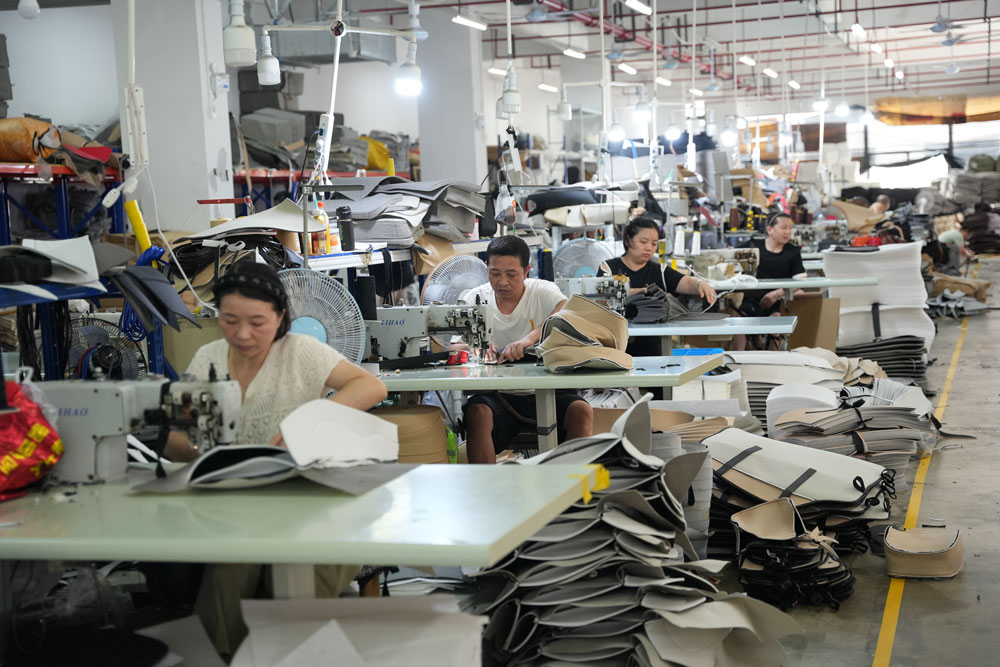
Conclusion
Airbag-compatible car seat covers require careful coordination between product design, material selection, seam engineering, manufacturing technology, and quality assurance.
A properly designed release seam can play an important role in allowing a seat-mounted side airbag to deploy as intended. However, compatibility cannot be established through stitching appearance, fabric weight, or the presence of specialized sewing equipment alone.
For car seat cover manufacturers, consistent production depends on clearly defined specifications, suitable equipment, controlled sewing parameters, documented inspections, and appropriate product-level evaluation.
For wholesalers, importers, distributors, and automotive aftermarket brands, the most reliable sourcing approach is to evaluate the complete product and its supporting technical evidence.
By looking beyond marketing claims and examining the manufacturer’s engineering process, production controls, and testing documentation, buyers can make more informed decisions when sourcing custom car seat covers for vehicles equipped with side airbags.
Looking for an automotive seat cover manufacturing partner? When evaluating OEM and ODM suppliers, discuss your target vehicle applications, material requirements, fitment specifications, and any applicable airbag compatibility requirements before finalizing the product design.